=== 1 · HEUTE, 2026 ===
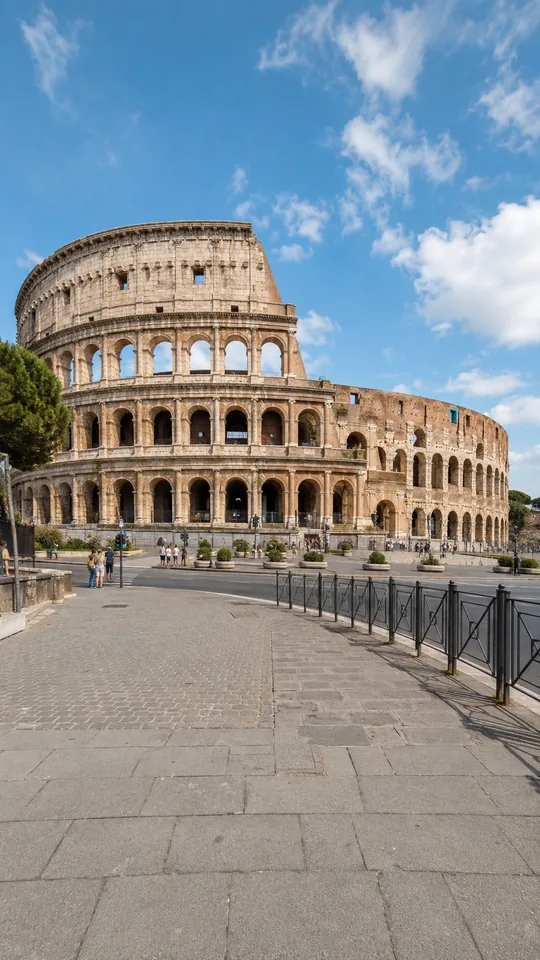
VORDERGRUND-SATZ: The lower foreground shows the paved modern pedestrian and street area leading toward the monument.

Show present-day Rome in 2026: the Colosseum as it appears today, partially ruined but well preserved, clean stone surfaces, archaeological fencing and subtle tourist infrastructure, a few small modern tourists in casual clothing, light modern traffic elements kept minimal, contemporary urban paving, crisp realistic daylight, premium travel-documentary realism. Keep the scene clean and uncluttered, with only a few background people. No dramatic crowds.


=== 2 · UM 1980 ===
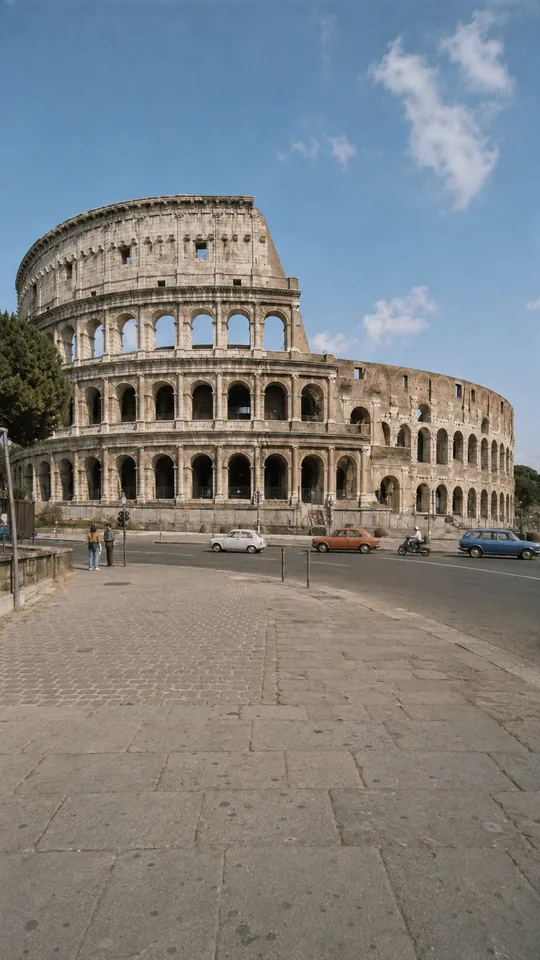
VORDERGRUND-SATZ: The lower foreground shows the street area leading toward the monument.

Show Rome around 1980: the Colosseum still recognizable in its modern ruined state, but the surrounding city should feel clearly late-20th-century. Use fewer barriers and less modern tourist polish than today. Include a few small 1970s-1980s Italian cars and a Vespa or two, period-appropriate street furniture, slightly more worn urban surfaces, and a subtle analog-era Rome atmosphere. Keep people sparse and secondary. No modern LED signage, no contemporary tourist installations.


=== 3 · UM 1800 ===
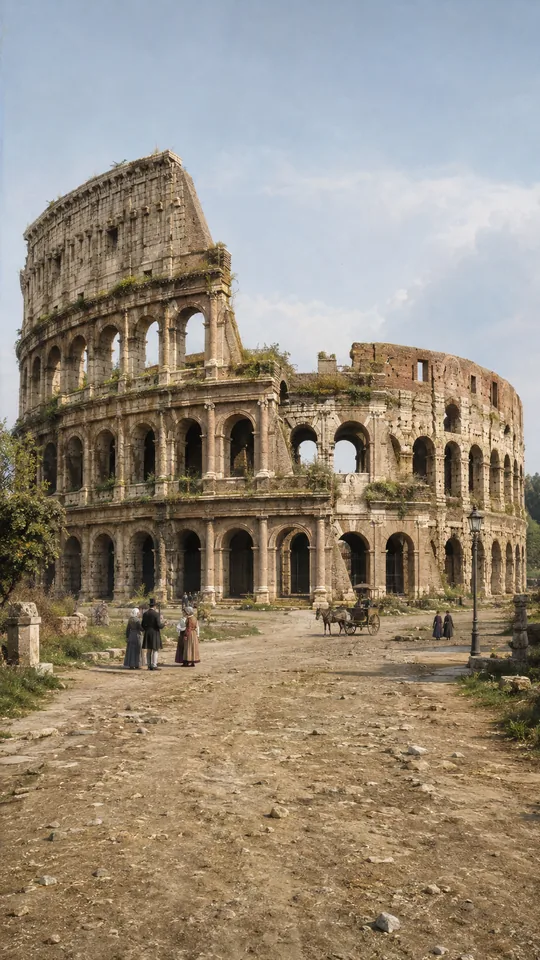
VORDERGRUND-SATZ: The lower foreground shows a rougher pre-modern ground surface leading toward the monument.

Show Rome around 1800 in the Romantic / Grand Tour period: the Colosseum as a picturesque ruin, with more visible overgrowth and vegetation in parts of the arches, a rough dirt-and-stone foreground instead of modern paving, a few 19th-century pedestrians in period dress, perhaps one horse-drawn cart in the distance, and a quieter, less urbanized setting. The monument should feel romantic and timeworn, with a soft sense of historical ruin admired by travelers and artists. No modern traffic, no modern barriers, no asphalt.


=== 4 · MITTELALTER ===
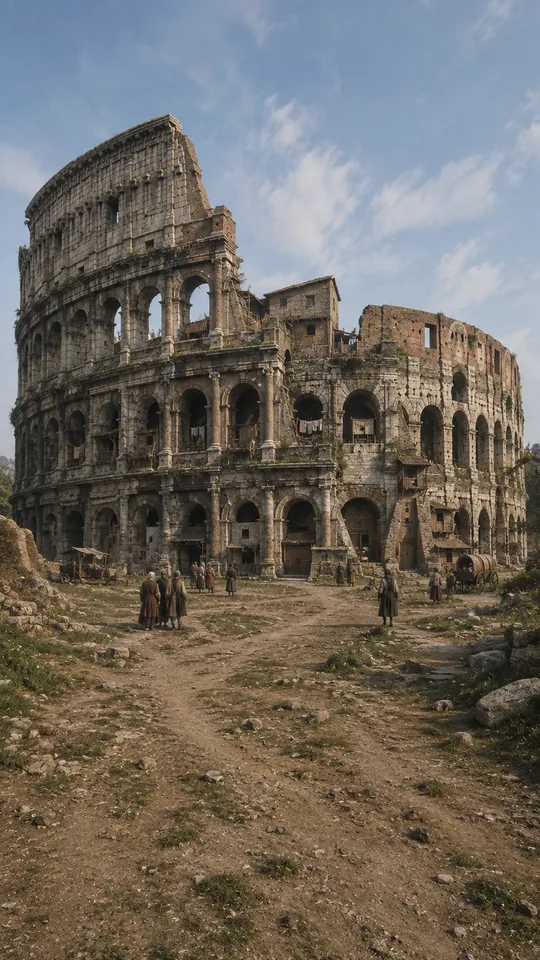
VORDERGRUND-SATZ: The lower foreground shows uneven dirt ground and rough paths leading toward the monument.

Show medieval Rome, approximately 12th-13th century: the Colosseum should appear more ruined and repurposed, with parts of the structure adapted for medieval use. Some lower arches may appear blocked in or irregularly occupied, with hints of small dwellings, workshops, storage spaces, or fortress-like reuse. The surrounding area should be unpaved and sparse, with dirt paths, a few medieval townspeople in simple garments, and a rawer atmosphere. The monument should feel less like a protected monument and more like a reused, living ruin inside medieval Rome. No modern objects.


=== 5 · UM 80 N. CHR. ===
VORDERGRUND-SATZ: The lower foreground shows packed earth and ancient Roman circulation space leading toward the monument.

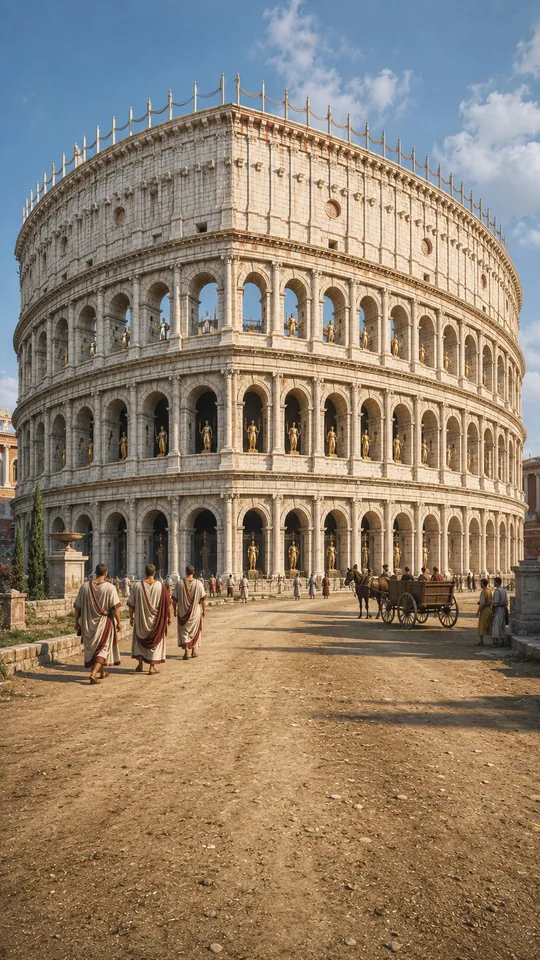
Show Ancient Rome around 80 AD, with the Colosseum newly completed and fully intact. The exterior should be complete, grand, and bright, with clean travertine stone, intact upper levels, regular arches, and a monumental imperial presence. The surrounding environment should feel like ancient Rome rather than modern Rome: packed-earth routes, a few Roman citizens in tunics and togas, perhaps a few animals or carts in the background, and nearby ancient urban structures implied but secondary. The Colosseum must look whole, pristine, and powerful. No visible ruin, no modern elements.


=== 6 · URZEIT (eigener Kopf, kein Bauwerk mehr) ===
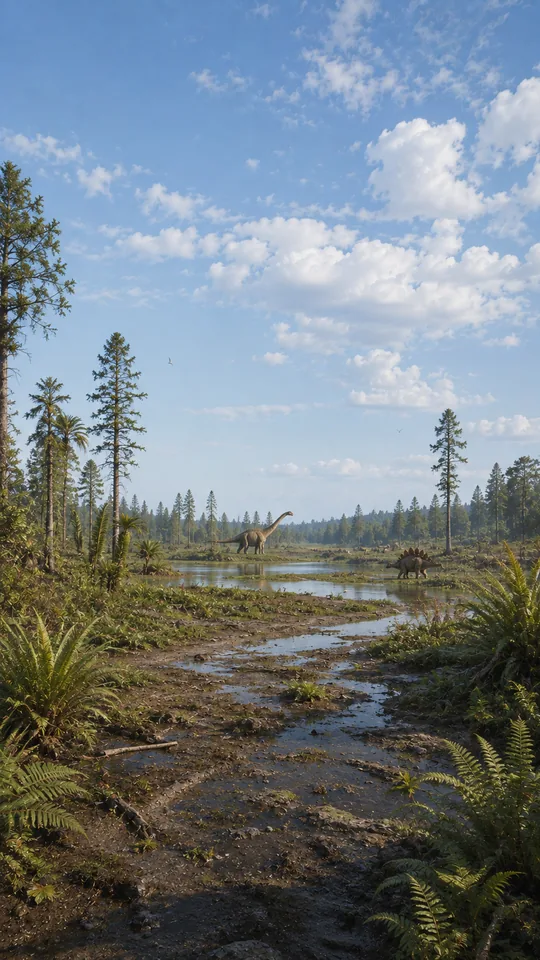
Create a vertical 9:16 ultra-photorealistic cinematic image of the exact same geographic site where the Colosseum would one day stand, from the exact same fixed camera position and framing used in all other images. The camera is at street level, about 1.6 meters high, using a 28mm full-frame lens, and the composition should remain centered and vertically framed the same way, but there is no Colosseum and no human structure at all. The lower foreground shows natural prehistoric terrain leading into the scene. Keep the horizon line, camera height, lens, framing, perspective, and central composition consistent with the other images. Bright natural daylight, highly realistic detail, no stylization, no text, no watermark.

Show a historically plausible prehistoric landscape in the region that would later become Rome: lush ferns, cycads, conifers, wet ground, shallow water channels or a marshy floodplain, untouched nature, and a few dinosaurs in the midground or background. The dinosaurs should not dominate the frame; they are part of the landscape. The mood should feel ancient, wild, and believable, as if the monument and the city have completely vanished back into deep time. No humans, no ruins, no architecture.